
Clear Land Without Destroying What's Underneath
Forestry Mulching in Honea Path for Overgrown Properties Before Development or Trail Installation
CTM Handy Home Services clears overgrown land using forestry mulching equipment designed to process vegetation on-site without removing topsoil or requiring material hauling. The equipment grinds trees, brush, and dense undergrowth into a protective mulch layer that stays on the property, preserving soil structure while eliminating invasive vegetation. Properties throughout Honea Path and surrounding communities often require this service before construction, pasture reclamation, or access route development.
Forestry mulching grinds standing vegetation into uniform chips that decompose naturally and suppress regrowth, unlike traditional clearing methods that scrape topsoil away or leave debris piles requiring removal. The company's new equipment processes approximately two to three acres per day depending on tree density, terrain slope, and undergrowth thickness. This approach eliminates the need for multiple passes with different machinery or burn permits that delay project timelines.
Schedule a site evaluation to review your property's density and identify the most efficient clearing approach.
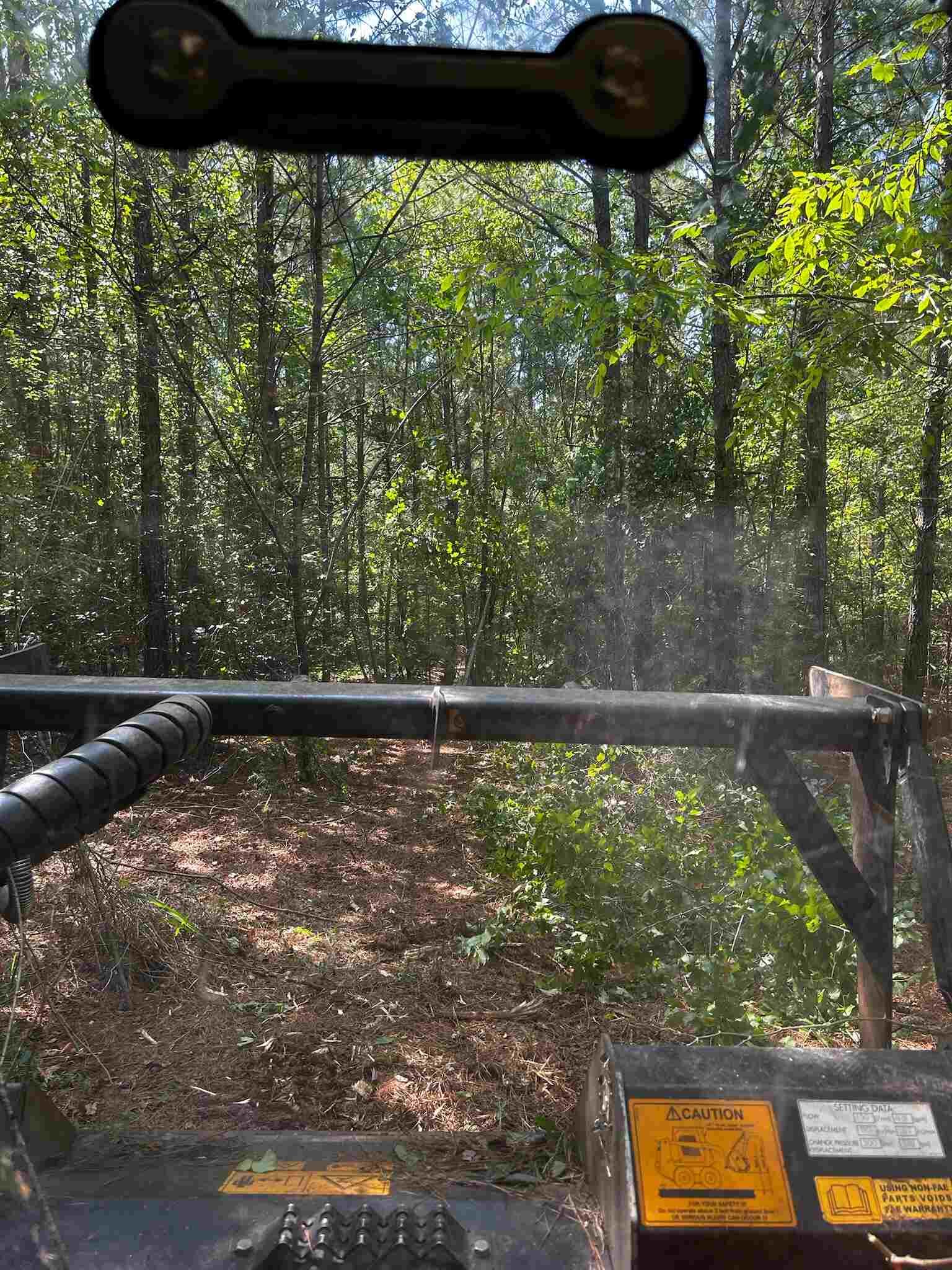
What Property Owners Notice After Clearing Completes
The mulch layer left behind serves multiple purposes beyond clearing. It prevents erosion on sloped properties, retains soil moisture during South Carolina's dry summer months, and creates a uniform base that supports future grading or seeding without additional soil amendment. Properties cleared this way show fewer ruts and compaction marks compared to sites cleared with bulldozers or excavators that disturb subsurface layers.
Once clearing finishes, you see defined boundaries, accessible terrain, and a consistent surface ready for the next phase of development. The mulch stabilizes immediately, so rain events following clearing work do not create washouts or sediment runoff into drainage areas. Properties prepared this way transition directly into construction staking, fence installation, or equipment access without waiting for debris removal or soil recovery.
Ideal applications include residential lot preparation before home construction, agricultural land conversion from wooded acres to pasture, trail creation through recreational properties, and vegetation control along fence lines or utility corridors. The service works equally well for small residential parcels requiring selective clearing and larger commercial tracts needing full-acre processing. Competitive daily project pricing accounts for acreage, vegetation type, and site accessibility rather than applying flat-rate formulas that penalize properties with challenging conditions.

Questions Before Clearing Your Property
Property owners preparing land for the first time often ask how the process affects existing soil, what timeline to expect, and whether permits apply to their project.
What happens to the trees and brush after mulching?
The equipment grinds all vegetation into mulch chips that remain on-site as ground cover. No hauling, burning, or disposal is required, and the mulch layer decomposes over several months while suppressing weed growth and protecting soil from erosion.
How quickly can forestry mulching clear overgrown land?
CTM Handy Home Services processes approximately two to three acres per day depending on tree density, undergrowth thickness, and terrain conditions. Properties with mature hardwoods or steep slopes take longer than flat lots with primarily brush and saplings.
Why does forestry mulching preserve soil better than bulldozing?
Mulching equipment cuts vegetation at ground level and grinds it in place without scraping or displacing topsoil. Bulldozers remove vegetation along with the root structure and several inches of topsoil, leaving bare subsoil that erodes quickly and requires expensive replacement before planting or construction begins.
When should I schedule clearing for properties in Honea Path?
Late fall through early spring provides the driest ground conditions, reducing equipment rutting and allowing faster daily progress. Summer clearing is possible but may require additional site preparation if wet weather creates soft spots that slow equipment movement.
What factors affect the cost of land clearing?
Acreage, tree diameter, vegetation density, slope percentage, and site accessibility all influence daily equipment time. Properties requiring selective clearing around existing structures or marked boundaries take longer than open tracts cleared to property lines.
CTM Handy Home Services provides free estimates after evaluating your property's specific conditions and clearing objectives. Request a site evaluation to receive competitive daily project pricing based on your land's unique characteristics.