
Ground Opened for Burials, Removals, and Drainage
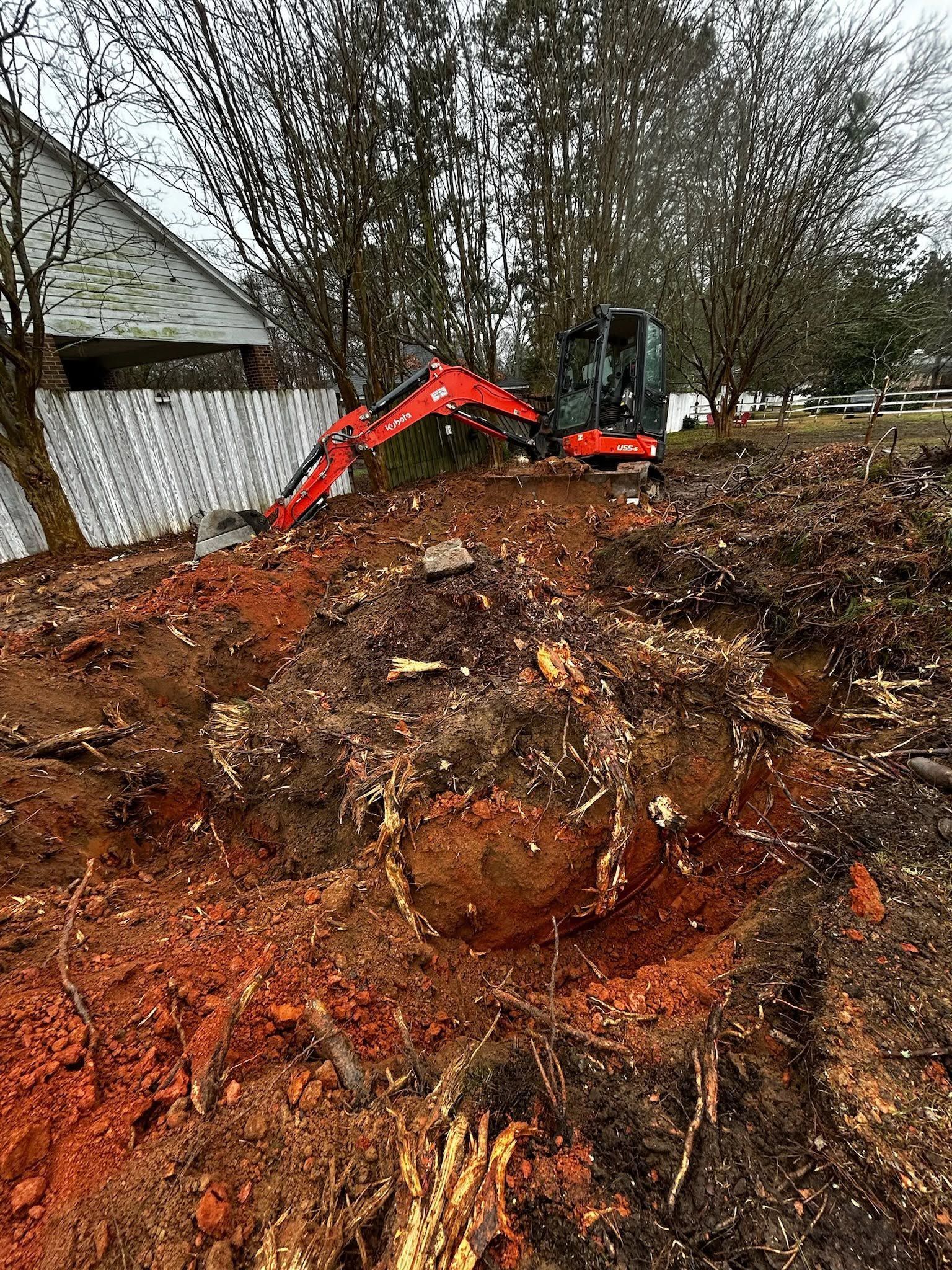
Excavation in Honea Path for stump removal, ditch digging, and site work requiring precise digging
Stumps that prevent mowing or construction, ditches needed to redirect water flow, or the solemn task of burying a horse all require excavation that goes beyond surface grading. CTM Handy Home Services provides excavation for horse burials, stump removal, ditch digging, and general site excavation throughout Honea Path and surrounding areas in South Carolina, using dependable equipment and experienced operators to complete projects safely and efficiently. Each property presents different soil conditions, access constraints, and depth requirements that determine equipment selection and excavation approach.
The work involves removing soil to specified depths while maintaining stable trench or hole walls, extracting root systems or buried materials, and managing excavated dirt for backfill or removal. Horse burial excavation requires dimensions that accommodate the animal respectfully, typically six to eight feet deep to prevent disturbance and meet setback requirements from water sources. Stump removal pulls the entire root ball from the ground, eliminating regrowth and creating space for replanting or construction rather than leaving decomposing wood below grade.
Schedule a free site visit to discuss excavation depth, soil disposal, and equipment access for your specific project.
What Changes After Excavation Completes
Excavation exposes subsurface conditions including soil layers, rock formations, and groundwater levels that weren't visible before digging began. Operators adjust technique when encountering roots, rocky soil common to parts of South Carolina, or clay layers that require different bucket angles and digging pressure than loose topsoil. Careful planning before excavation identifies underground utilities, determines spoil pile locations for excavated dirt, and establishes safe slopes for trench walls deeper than four feet.
Once excavation is finished, you see clean-edged holes or trenches excavated to the planned dimensions, root balls removed completely so stumps won't resprout, and ditches sloped to move water at the intended grade. The ground around excavation areas shows minimal disturbance when operators work precisely, with turf damage limited to the dig zone and equipment tracks rather than spread across surrounding lawn. For burial excavations, backfilling happens with the previously removed soil, compacted in layers to prevent settling that creates depressions over time.
Customized solutions account for site-specific challenges like limited gate access requiring smaller excavators, high groundwater that fills holes during digging and requires pumping, or tree proximity that demands hand digging near sensitive root zones. Ditch excavation includes establishing proper slope for gravity flow, typically one percent minimum grade, and shaping smooth bottoms that don't create turbulence or sediment traps when water moves through.
What Property Owners Usually Ask
Excavation projects involve below-grade work where conditions aren't fully visible until digging starts, making clear communication about expectations important.
What happens to soil removed during excavation?
Excavated dirt can be spread on-site if you have areas needing fill, stockpiled for later use, or hauled away if there's no room or need for the material, with hauling adding to project cost based on volume and disposal location.
How deep can excavation go before special precautions are required?
Excavations deeper than four feet require either sloped trench walls or shoring systems to prevent collapse, following OSHA safety standards that protect workers from cave-ins in unstable soil.
What determines the size of equipment used for excavation?
Gate widths, overhead clearance from tree branches or power lines, ground conditions that affect machine stability, and dig depth all influence whether compact excavators or full-sized machines are appropriate for the job.
How does rock affect excavation work in Honea Path?
Bedrock or large buried rocks may require hydraulic hammers to break material before removal, which extends project time and affects cost compared to excavation in soil that digs freely with standard buckets.
When should stump removal happen relative to other landscaping work?
Stumps come out before final grading and planting begin, since removal disturbs surrounding soil and leaves depressions that need filling and compaction to match adjacent grade levels.
CTM Handy Home Services handles excavation projects that require sensitivity, precision, or straightforward digging power depending on the task. Reach out to discuss your excavation needs and arrange a site assessment that considers soil type, access routes, and disposal requirements specific to your property.